
A Global Human Layer
Operational Mind Chill Guardians
Mind Chill Guardians:if the liability lands on a person, the sign-off does too.Mind Chill Guardians: if the liabilitylands on a person, the sign-off does too.
Real people with lived experience, trained to review only the high-impact edge cases software shouldn't own alone.
Conflict-checked · Rotation-based · Audit-traceable · Minimal disclosure by default

Sampling Integrity
Random audits that keep the lane honest.

Exception Review
Hardship, overrides, irreversible actions.

Dispute Desk
Challenge-ready outcomes tied to a Status Link.
Not a certification. Scope-limited verification. Acceptance depends on counterparty/programme requirements.
We help make AI Care about us.
Structural safety for high-impact AI actions.

Our Mind Chill Guardian Story
A global human layer that software can't fake.
When liability lands on a person, the sign-off should too.
Conflict-checked · Rotation-based · Audit-traceable · Programme-scoped

From calming minds to defending outcomes
Mind Chill began in 2017 as immersive art built to reduce anxiety and create calm at scale. Then the same feeds that buried calm and rewarded outrage started training the systems that now make real decisions. We didn't want more rhetoric. We wanted receipts.
The moment it clicked
A message arrived: someone's child felt safer because of what they experienced. Around the same time, lived experience inside our own community made one thing obvious: the nuance that matters in high-impact decisions can't be reliably reduced to a prompt. So we designed a human layer for the edge cases—structured, scope-bound, and auditable.

Guardians are not a "panel." They're a network.
Mind Chill Guardians come from different countries, backgrounds, and lived realities. That diversity is not branding—it's risk reduction. It makes decisions harder to game, easier to challenge, and more credible under scrutiny. Guardians do not "run the system." They review only what the lane requires humans to own.

Receipts over rhetoric
Operational Guardians plug into Good Proof lanes as a controlled finality mechanism: conflict checks, rotation, multi-review where required, and an audit trace tied to a Status Link. Minimal disclosure by default. If a decision is appealed months later, you can show what happened, within scope, without dumping sensitive payloads.
Why buyers choose Guardians
Lived experience at the edge cases (not a generic helpdesk)
Conflict-checked + rotation-based (anti-rubber-stamp by design)
Multi-review on high-risk lanes (when the programme requires it)
Audit-traceable outcomes (defensible in disputes, audits, procurement)
Minimal disclosure by default (proof, not payloads)
Not a certification. Scope-limited verification. Acceptance depends on counterparty/programme requirements.
OUR MOAT
We Care Defensibly

Not "truth." Not "trust." Defensible scope.
Guardians don't certify the universe. They operate inside explicit boundaries so outcomes remain checkable and contestable.
Guardians do
- Attest that scoped evidence is consistent within a defined standard window
- Escalate ambiguity into a human-final decision within stated limits
- Issue refresh/withdraw triggers when conditions change
- Produce dispute-ready summaries that cite Receipt/Stamp IDs
Guardians do not
- Provide blanket "safe" certifications
- Approve regulatory compliance
- Override your governance program
- Require raw prompts/logs/PII by default

Structural Enforcement
When prompt injection happens, the Stamp limits damage.
You cannot instruct your way to security. Structural constraints beat prompts.

Define high-impact actions

Require a Stamp
No Stamp → No Ship

Verify by Status Link
Check live state

Escalate to Guardians
Exceptions + disputes only
VALID
→ proceed
NEEDS REFRESH
→ block until re-verified
WITHDRAWN
→ stop immediately
NOT VERIFIED
→ fail-closed
Note: Live Status supersedes PDFs. No silent edits.
Three Guardian modes

Sampling Integrity
Random audits that keep the lane honest.

Exception Review
Hardship, overrides, irreversible actions.

Dispute Desk
Challenge-ready outcomes tied to a Status Link.

Anti-rubber-stamping is designed in.
Structural constraints, not policies.

Conflict rules
Reviewers can't assess decisions where they have a stake. Declared, logged, and acted upon.
✓ Conflict declaration · ✓ Auto-reassignment · ✓ Logged

Multi-review
Consensus on the most sensitive actions

Audit trails
Sampling + quality controls are receipted

Withdrawal mechanics
If evidence becomes invalid, status changes—no silent edits
Scope language
Every outcome includes qualifiers and "do-not-say" boundaries. Guardians attest within limits, not beyond them.
What you get in 30 days
- Guardian escalation rules for one lane (what triggers human review)
- Dispute workflow + response SLA target (programme-scoped)
- Review templates + "decision summary" output format
- Refresh/withdraw triggers tied to Status Link
- Redacted specimen pack for procurement/legal
Who this is for

CISO / Security
Reduce blast radius + revocation ready
Legal / Procurement
Dispute-ready proof objects

Risk / Insurance
Lowers dispute costs + clearer accountability

Product / AI
Ship autonomy without trust claims outrunning reality
Compliance / Audit
Verifiable artifacts that travel outside the perimeter

Escalation Flow
When edge cases need humans, escalation is structural.
Not every decision requires a Guardian. But when one does, the process is defined, conflict-checked, and traceable.
1. Trigger
System flags a high-impact action or exception
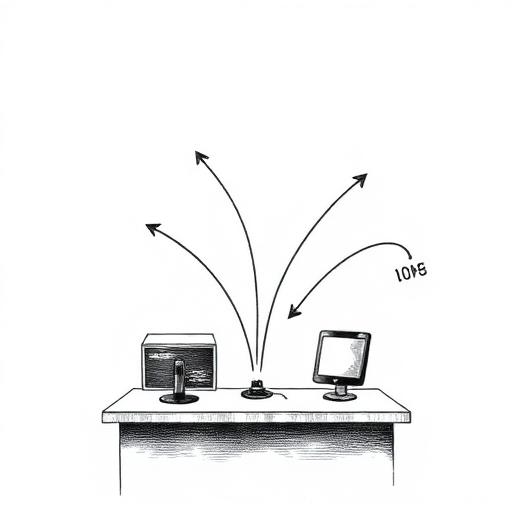
2. Route
Case assigned to conflict-checked Guardian via rotation
3. Review
Guardian reviews scoped evidence within lane boundaries

4. Outcome
Uphold, require refresh, or support withdrawal—audit-traceable
Decision rule: Guardians do not expand scope. They resolve exceptions within lane boundaries—uphold, require refresh, or support withdrawal.
DisputesExceptionsHigh-risk overridesPost-incident outcomes
Continuous Improvement
Lived-experience edge-case discovery and governance
Guardians don't just review—they surface patterns that improve the rules. A structured loop ensures edge cases become policy updates, not recurring blind spots.
1
Edge-case discovery
Guardian flags novel scenario during review
2
Escalation + review
Pattern logged; multi-reviewer consensus sought
3
Policy/rule update
Lane rules or escalation criteria amended
4
Regression testing
Edge case added to sampling + test suite
5
Change log entry
Published to Good Proof LIVE Ledger
This loop ensures edge cases inform future automation—not just one-off decisions. Patterns become policy; exceptions become rules.
Guardian role boundaries
Guardians are exception-only human finality—not a general outsourcing layer.
Guardians ARE used for
- High-impact exception review
- Dispute resolution within lane scope
- Hardship/override sign-off for irreversible actions
- Sampling integrity audits
- Edge-case pattern discovery
Guardians are NOT
- A sales or referral layer
- Blanket arbiters of truth
- General claims processing outsourcing
- Routine approval rubber-stamping
- Scope expanders beyond lane boundaries
Programme-scoped access only
Guardians operate within defined lane boundaries with minimal disclosure by default. They see only what's necessary for the review—no PII/PHI unless explicitly required by the programme. Conflict checks, rotation, and audit trails are enforced.
Guardians resolve exceptions within lane boundaries—uphold, require refresh, or support withdrawal. They do not expand scope.
Make high-impact AI shippable.
Gate it. Stamp it. Verify it. Escalate only what needs humans.