
Deactivation & Disputes — Gig Economy
Deactivations and pay holds that survive challenge months later.
No Stamp → No Ship for deactivations, pay withholding, and fraud labels.
When a model can cut off someone's income, "our system says so" isn't evidence. Good Proof gates high-impact actions with a contract-referenceable Status Link (true now) + an IDA Evidence Pack (true then). If it's not VALID, it doesn't execute.
- Deactivations with proof that survives appeals, courts, and regulators
- Payout holds with live status counterparties can check without portal access
- Fraud/safety labels you can defend without leaking detection signals
- When evidence changes: refresh or withdraw returned wherever the Status Link is checked
Fail-closed•Append-only•Scope-bounded
Not a certification. Scope-limited verification. Acceptance depends on counterparty/programme requirements.
Why gig economy buyers are moving now
Dispute escalation, regulatory scrutiny, and counterparty expectations are converging.
Deactivation disputes escalating
Permanent deactivations are challenged months later by workers, advocates, and regulators. Decision-time evidence is expected but rarely portable.
Payout holds creating partner escalation
Held funds trigger processor scrutiny, legal threats, and reputational risk. Counterparties need verifiable proof without dashboard access.
Repeat investigations from poor records
The same decision is re-investigated for appeals, arbitration, regulator queries, and press inquiries — each time reconstructed from scratch.
Fraud/safety enforcement challenged later
Labels applied under one model or policy version are contested after updates. Without decision-time proof, defensibility collapses.
Counterparties demanding portable proof
Courts, regulators, arbitrators, and enterprise customers expect verifiable evidence they can check independently — not screenshots.
Privacy limits blocking raw file sharing
Sharing raw case files, PII, and detection signals creates new liability. Proof must be portable without payload exposure.
Incident response needs immediate stop-rely
When a model, vendor, or policy is compromised, all downstream reliance must stop wherever the Status Link is checked.
Manual reconstruction draining capacity
Ops, legal, and compliance teams spend days rebuilding evidence for each dispute, audit, or regulator query — budget that could be redirected.
Good Proof provides scope-limited verification evidence and stop-rely semantics. It is not a certification.

What a Stamp proves (and what it doesn't)
Proves (within lane scope)
- Decision class + action (deactivate / payout hold / fraud label / restriction / appeal outcome)
- Decision-time timestamp
- Signer/authority reference
- Policy/rule-pack identifier + version reference (lane-scoped)
- Scope boundaries + expiry/evidence window
- Validity state (VALID / NEEDS REFRESH / WITHDRAWN / NOT VERIFIED)
Does NOT prove
- Underlying truth of the case
- Outcome correctness or model correctness
- Certification or regulatory compliance
- Worker PII, customer PII, detection signals, raw case notes by default
In disputes: Status Link = reliance state now. IDA Evidence Pack = fileable snapshot for the decision-time record.
Not a certification. Scope-limited verification. Acceptance depends on counterparty/programme requirements.

Integration in 3 touchpoints
1
Issue
At deactivation / payout hold / high-impact restriction → require a Stamp.
2
Notify
In worker notices, partner/bank comms, and appeal packets → include the Status Link.
3
Execute
At enforcement (dispatch/pay/restrictions) → verify Status Link (fail-closed).
High-impact gating only. Everything else runs normally.
What gets stamped
If it can trigger a complaint, an appeal, a regulator touch, or litigation — stamp it.
Permanent deactivation / suspension / removal from access
Payout hold / withholding / release-deny outcome
Fraud labels that trigger enforcement or collections
Safety labels that change access, routing, or dispatch eligibility
Dispatch throttling or earnings-impacting restrictions
Identity recovery lockouts / re-verification blocks
Chargeback/fraud loss recovery actions affecting worker pay
Appeal outcomes and final decision closures
Partner-critical flags shared with processors/enterprise customers
Delists/restrictions tied to earnings or marketplace standing
Global Coverage
Regulatory reality
No hype, no compliance claims — gig platforms are being pushed toward decision transparency, contestability, and defensible record-keeping.

EU
Platform Work Directive drives algorithmic-management transparency, contestability, and human review expectations.

UK
Worker status litigation and Online Safety duties increase accountability and record-keeping expectations.

US
Worker misclassification, wage disputes, and anti-discrimination claims hinge on defensible decision records.

Canada
Online harms direction and platform governance expectations emphasise transparency and accountability.

Australia
Digital Labour Platform Deactivation Code requires fair process and defensible records before deactivation.

Asia
AI governance frameworks emphasising bounded risk, traceability, and controllability across gig platforms.

Middle East
Third-party reliance, cyber/operational resilience, and labour governance expectations are tightening.

Africa
Market-conduct, complaints-handling, and record-keeping pressure is increasing across gig and logistics platforms.
Good Proof doesn't certify compliance. It makes high-impact actions verifiable, refreshable, and withdrawable by link.
Not legal advice. Final legal mapping is owned by programme counsel.
Jurisdictional Configuration
Programme-specific country overlays
Each programme defines scope, evidence, and access rules per jurisdiction. Examples: UK, EU, US, UAE, Saudi Arabia, South Africa, Kenya, Nigeria.
Scope boundaries per jurisdiction
Evidence windows and retention rules
Redaction / disclosure controls
Verifier checklist per region
Appeal and dispute handling rules
Language support and verifier access model
Not legal advice. Final legal mapping is owned by programme counsel.
Live Status States
If it is not VALID, enforcement does not execute.
VALID
Rely within scope. Not a guarantee of outcome correctness.
NEEDS REFRESH
Material change fired — re-verify before relying.
WITHDRAWN
Stop relying immediately; returned wherever the Status Link is checked.
NOT VERIFIED
Unverified; also returned on timeout/unreachable (fail-closed).
Fail-closed: timeout/unreachable = NOT_VERIFIED. Block or escalate — never assume validity.
When status changes — and what it means
Status triggers define when a Status Link moves to NEEDS_REFRESH or WITHDRAWN.

NEEDS_REFRESH
Re-verify before you rely.
Policy/rule-pack version change
Risk threshold or model configuration change
New material evidence intake on the case
Appeal state transition (filed, escalated, reviewed)
Identity/re-verification status change
Payout logic parameter change
Evidence-window expiry
Data source or reference provider change
NEEDS_REFRESH means re-verify before rely, not defer.

WITHDRAWN
Stop-rely signal. Action must not proceed.
Suspected compromise or evidence tampering
Confirmed misconfiguration causing out-of-scope enforcement
Unauthorized scope expansion
Severe evidence integrity failure
Verified malicious pattern or abuse of enforcement tooling
Legal or incident command stop-rely directive
Fail-closed: Wherever the Status Link is checked, if WITHDRAWN → block or escalate.

What's inside the IDA Evidence Pack
Decision-time snapshot for disputes, audit, and filing.
Decision summary + lane scope boundary
Decision-time timestamp + evidence window
Policy/rule-pack identifier + version reference
Authority/signer reference
Verification transcript + status history pointer
Redaction matrix (default exclusions: worker PII, customer PII, raw case notes, detection signals)
Proof ≠ payloads. Raw claim files, worker PII, and detection signals are not required by default.
What you get (two artefacts, one standard)

Status Link (authoritative now)
A counterparty-verifiable link that returns current validity within scope.
- Returns: status, scope, expiry, verified_at, signer, verify_url
- Fail-closed: unreachable = NOT_VERIFIED
- Built for enforcement, notices, appeals, partner packets
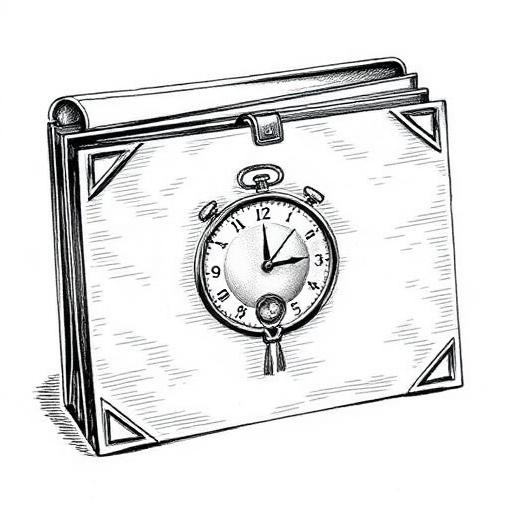
IDA Evidence Pack (snapshot then)
View full details →A time-stamped snapshot you can forward, file, and cite.
- Built for disputes, arbitration, audits, and procurement
- Minimal disclosure by default (proof ≠ payloads)
- Append-only history; withdrawal ≠ erasure
PDFs are great for filing. Status Links keep them current.
What counterparties can verify
No login required. No portal access. No NDA for default verification.
Current validity state (VALID / NEEDS REFRESH / WITHDRAWN / NOT VERIFIED)
Scope boundary + expiry
Authority reference + verified_at timestamp
Canonical verification route (verify.goodproof.mindchill.ai)
Forwardable redacted IDA packet
Privacy-preserving by default (no raw PII/case notes)
Prompts can be manipulated. Status can't.
We don't "trust the model." We gate the action.
No Stamp → block or escalate
Material change triggers → NEEDS_REFRESH (prevents silent drift)
Compromise/defect → WITHDRAWN propagates stop-rely wherever checked
Guardians handle exceptions and disputes within scope (not the hot path)
Who buys this in Gig Economy
Platform buyers and external counterparties with high-impact decision accountability.
Platform buyers
Trust & Safety
Pain: Enforcement decisions become PR + regulator events when contested.
Outcome: Each high-impact action has a verifiable Status Link + snapshot IDA.
Book a Gig Economy Stamp SprintFraud / Risk
Pain: Fraud labels and risk holds are challenged after model/policy changes.
Outcome: Decision-time proof tied to the policy version that applied, with fail-closed enforcement.
Book a Gig Economy Stamp SprintPayments / Treasury Ops
Pain: Payout holds trigger legal threats and processor escalations.
Outcome: Live status shows whether the hold is still valid; withdrawals propagate stop-rely wherever checked.
Book a Gig Economy Stamp SprintDriver/Courier Ops / Marketplace Ops
Pain: Deactivation backlash and operational disruption from inconsistent enforcement.
Outcome: Consistent gating with portable proof reduces re-investigations and escalation cycles.
Book a Gig Economy Stamp SprintLegal / Employment Counsel
Pain: Class actions turn into 'prove what was true then' discovery exercises.
Outcome: IDA Evidence Pack is time-stamped and scope-bounded; Status Link shows current state.
Book a Gig Economy Stamp SprintCompliance / Audit / GRC
Pain: Audit and regulator queries require manual evidence reconstruction across fragmented systems.
Outcome: Append-only verification history with fileable Evidence Pack snapshots.
Book a Gig Economy Stamp SprintPublic Policy / Regulatory Affairs
Pain: Regulator engagement lacks portable, verifiable evidence of governance controls.
Outcome: Machine-checkable verification artefacts that demonstrate decision governance without system access.
Book a Gig Economy Stamp SprintProcurement / Vendor Risk
Pain: Third-party screening, collections, and legal vendors lack portable verification.
Outcome: Status-linked vendor decisions with withdrawal propagation and verifier access.
Book a Gig Economy Stamp SprintExternal verifiers
Courts / tribunals / arbitrators
Pain: Evidence is system-bound and reconstructed under time pressure.
Outcome: Scope-bounded decision-time snapshot verifiable by link.
Regulators / ombuds / worker reps
Pain: Scrutiny requires portable proof without platform dashboard access.
Outcome: Status Link returns validity, scope, and expiry — no login required.
Payment processors / enterprise customers
Pain: Partner risk reviews require defensible records of enforcement decisions.
Outcome: Forwardable IDA packet with minimal disclosure by default.
Insurers / auditors
Pain: Post-incident reviews require decision-time defensibility.
Outcome: Append-only verification history with programme-configured redaction.
Where budget comes from
Usually funded from existing dispute, risk, and compliance lines — not new category spend.
Dispute operations
Trigger: Rising appeal volume, arbitration costs, or settlement frequency
Why now: Portable proof reduces repeat investigation and reconstruction effort per dispute.
Fraud / chargeback loss recovery
Trigger: Fraud-loss write-off increase or chargeback ratio pressure from processors
Why now: Decision-time proof makes fraud enforcement defensible without leaking detection signals.
Payout risk / partner escalation
Trigger: Processor scrutiny, legal threats on held funds, or reputational risk from pay disputes
Why now: Live status and withdrawal semantics give counterparties verifiable answers, not screenshots.
Outside counsel / litigation reserve
Trigger: Class-action exposure, arbitration volume, or regulator enforcement action
Why now: Fileable Evidence Pack snapshots reduce discovery burden and strengthen defensibility.
Compliance / audit remediation
Trigger: Regulatory inquiry, audit finding, or internal controls programme
Why now: Append-only verification history replaces manual reconstruction with portable proof.
Policy programme governance
Trigger: Policy version drift exposure or contestability mandate from regulators
Why now: Change triggers ensure decision-time proof stays current under policy evolution.
Incident response / controls hardening
Trigger: Model/vendor incident requiring immediate stop-rely across enforcement surface
Why now: WITHDRAWN propagates stop-rely wherever the Status Link is checked.
Procurement / third-party onboarding
Trigger: Vendor qualification burden or enterprise customer assurance requirements
Why now: Status-linked verification for screening, collections, and legal vendors.
Start with one high-impact lane and prove dispute-resolution friction reduction before expansion.
24-Month Horizon
Future pressure radar
Conservative assessment of where buyer and counterparty expectations are heading.
Stronger algorithmic-management scrutiny
Regulators and courts are increasingly requiring explanations for automated decisions that affect livelihoods.
Faster contractual stop-rely requirements
Enterprise customers and processors will demand immediate revocation propagation as a contract term.
Higher proof portability demands
Courts, arbitrators, and regulators expect evidence that travels outside platform dashboards.
Tighter change-control on risk models
Model/policy changes that silently invalidate prior decisions will face increasing challenge.
Increased cross-border consistency pressure
Platforms operating across jurisdictions face rising pressure for consistent, defensible governance.
Larger class-action and arbitration readiness burden
Higher volume of coordinated challenges requires scalable, machine-checkable evidence infrastructure.
More insurer and processor evidence expectations
Risk partners will require verifiable decision-time proof as a condition of coverage or processing.

Our Mind Chill Guardian Story
A global human layer that software can't fake.
When liability lands on a person, the sign-off should too.
Conflict-checked · Rotation-based · Audit-traceable · Programme-scoped

When Guardians are used (only when required)
Most decisions remain automated. Humans step in only where human finality is required: exception approvals, disputes, high-risk overrides, or post-incident outcomes with human liability.
Mind Chill Guardians provide programme-scoped human finality for exception lanes only, minimizing sensitive payload handling, with anti-rubber-stamp controls: conflict checks, rotation, sampling audits, and multi-review thresholds for high-risk lanes.

From calming minds to defending outcomes
Mind Chill began in 2017 as immersive art built to reduce anxiety and create calm at scale. Then the same feeds that buried calm and rewarded outrage started training the systems that now make real decisions. We didn't want more rhetoric. We wanted receipts.
The moment it clicked
A message arrived: someone's child felt safer because of what they experienced. Around the same time, lived experience inside our own community made one thing obvious: the nuance that matters in high-impact decisions can't be reliably reduced to a prompt. So we designed a human layer for the edge cases—structured, scope-bound, and auditable.

Guardians are not a "panel." They're a network.
Mind Chill Guardians come from different countries, backgrounds, and lived realities. That diversity is not branding—it's risk reduction. It makes decisions harder to game, easier to challenge, and more credible under scrutiny.

Receipts over rhetoric
Operational Guardians plug into Good Proof lanes as a controlled finality mechanism: conflict checks, rotation, multi-review where required, and an audit trace tied to a Status Link. Minimal disclosure by default.
Why buyers choose Guardians
Lived experience at the edge cases (not a generic helpdesk)
Conflict-checked + rotation-based (anti-rubber-stamp by design)
Multi-review on high-risk lanes (when the programme requires it)
Audit-traceable outcomes (defensible in disputes, audits, procurement)
Minimal disclosure by default (proof, not payloads)
Procurement-ready clause
Template language for your legal team.
"For defined high-impact gig economy actions, Provider shall issue and maintain a Good Proof Stamp with an active Status Link. Buyer systems SHALL verify the Status Link before executing enforcement steps. Actions with NOT_VERIFIED, NEEDS_REFRESH, or WITHDRAWN status are treated as unverified and must be blocked or escalated per programme runbooks."
Schedule A (template — programme terms)
Definitions + operating rules procurement teams can copy/paste.
1. Definitions
- High-Impact Action Class: the defined action lane (e.g., deactivation, payout hold, fraud label) requiring verification.
- Status Link: the verification endpoint returning validity state + scope boundaries.
- Scope Boundary: the policy/version/evidence configuration covered by the Stamp.
- Evidence Window: the programme-defined period and inputs considered for decision-time verification.
- Evidence Pack: the fileable, programme-configured snapshot for disputes/audit/procurement.
2. Required states
- VALID→ may proceed within scope.
- NEEDS_REFRESH/ NOT_VERIFIED / WITHDRAWN → must block or escalate per lane rules.
- Fail-closed:timeout/unreachable ⇒ NOT_VERIFIED.
3. Withdrawal / stop-rely semantics
- WITHDRAWN is returned wherever the Status Link is checked.
- No execution may proceed on WITHDRAWN.
- Re-verification required before renewed reliance.
4. Anti-spoof controls
- verify_url host MUST match official verifier (verify.goodproof.mindchill.ai).
- HTTPS only. No insecure overrides. Redirects forbidden.
- Domain mismatch or TLS failure ⇒ NOT_VERIFIED.
5. SLA placeholders (complete per programme)
Verifier availability target: [___]%. Response-time target: [___] ms. Support turnaround: [___] hours.
6. Retention + privacy/redaction defaults
- Evidence Pack excludes worker PII, customer PII, raw case notes, and detection signals by default.
- Retention windows programme-defined per jurisdiction.
7. Emergency override governance
- Emergency overrides are programme-defined, governed, and auditable.
- Mandatory post-action reconciliation and stamped audit trail.
Not legal advice. Template language for your legal team.
Not a certification. Scope-limited verification. Acceptance depends on counterparty/programme requirements.
What you get in 30 days
One decision class, production-ready controls.
One decision class defined (e.g., deactivation or payout hold) with scope boundaries
Stamp issuance workflow wired into enforcement path
Counterparty verification route tested end-to-end (no login required)
Refresh + withdrawal triggers configured (policy/version/evidence change)
One redacted IDA specimen generated
Dispute-ready verifier checklist produced
Go/no-go expansion recommendation
Due Diligence FAQs
Make Gig Economy decisions shippable.
Start with one decision class. Gate it end-to-end. Expand when counterparties rely on the Status Link.
Not a certification. Scope-limited verification. Acceptance depends on counterparty/programme requirements.